
A Conversation with Kim Carney
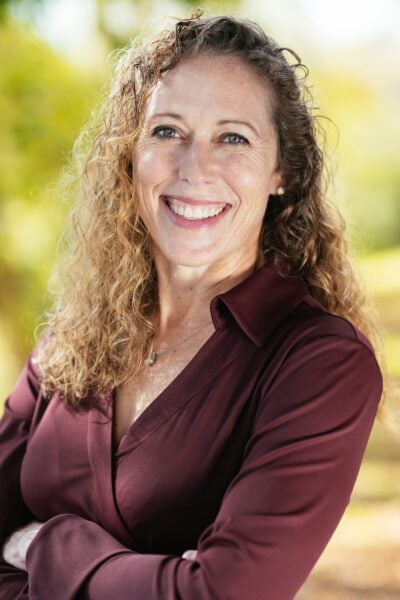 As the veterinary profession continues to expand beyond the clinic, more practitioners are discovering that a DVM can lead to paths they never anticipated. Ahead of the upcoming PCVE Symposium, we met with Kimberly Carney, DVM, PhD, MPH, DACVPM, Dean of the Lincoln Memorial University (LMU) College of Veterinary Medicine at Orange Park, to talk about her professional journey from an ambulatory practice to the dean’s office at LMU.
AAVMC: You spent over a decade owning a mixed-animal practice in East Tennessee. What did you love most about that work?
Carney: I bought my mixed-animal practice the week after graduating from veterinary school, so in many ways I grew up alongside it. As a solo veterinarian in a rural community, my clients and practice team became much more than that—they became my community. They celebrated with me through marriage, supported me through pregnancy, and watched my son grow up, often right there in the clinic.
What I loved most were the relationships. I had the privilege of caring for generations of families and their animals through every stage of life, from welcoming new puppies and calves to helping owners through difficult end-of-life decisions. Rural practice isn’t just about medicine; it’s about becoming part of the fabric of a community.
I sold the practice in 2014 but whenever I visit East Tennessee, I still can’t get in and out of the grocery store in less than 45 minutes because everyone wants to catch up. To me, that’s one of the greatest compliments a veterinarian can receive.
AAVMC: Was there a specific moment that made you start thinking about a life beyond clinical practice?
Carney: There wasn’t one defining moment. I’d always been involved in short-term international veterinary work and was drawn to projects that combined veterinary medicine with community development. Those experiences began to change how I thought about impact. In clinical practice, I could make a profound difference for one animal, one client, or one family at a time. Through community development, I began to see the opportunity to create upstream changes that could improve the health and well-being of entire communities—a multiplicative impact rather than an individual one.
When the opportunity came to move to Bolivia with Christian Veterinary Mission, my son was entering middle school, and it seemed like the right season to say yes. Looking back, that’s been a recurring theme throughout my career. I haven’t always felt completely prepared but when meaningful opportunities presented themselves and someone believed I could contribute, I’ve been willing to take the leap.
Those international experiences also sparked a desire to better understand how healthy communities are built. That curiosity eventually led me to pursue a Master of Public Health and, later, a PhD. Neither was part of some long-term career plan; they were simply the next opportunities to learn after asking bigger questions.
I still love clinical practice and continue to do occasional relief work. It keeps me connected to clients, patients, and the realities of everyday veterinary medicine. That clinical perspective remains the foundation for everything I’ve done since.
AAVMC: What led you to Lincoln Memorial University? Was academia something you actively pursued or did the opportunity find you?
Carney: The opportunity definitely found me.
Before moving to Bolivia, I had taught as an adjunct in LMU’s veterinary technology program. Once I was in Bolivia, I found myself teaching in a veterinary school there, and I discovered how much I enjoyed helping students become veterinarians.
When I returned to the United States, opportunities at several veterinary colleges emerged, and LMU felt like the right place to continue that journey. Looking back, none of this was part of the career plan I had as a veterinary student. I thought I’d spend my life with just a vet truck and doing ambulatory practice. Instead, one opportunity led to another because I was willing to listen when people asked me to help with something bigger than I had imagined for myself.
One thing I also discovered is that veterinary colleges need far more than specialists and career academics. They need practitioners who understand the realities of everyday practice. I entered academia as a mixed-animal practitioner, and I quickly realized those experiences weren’t secondary to academic medicine. They were exactly what many students needed to hear.
AAVMC: What was the hardest part of leaving clinical practice (professionally or personally)?
Carney: The hardest part wasn’t leaving clinical practice; it was leaving the people.
I wasn’t just changing jobs. I was leaving the community that had helped raise me professionally, my practice family, my real extended family, and everything that felt familiar. Moving internationally wasn’t just a career transition; it was a life transition.
What I’ve learned since is that relationships remain the most rewarding part of every chapter. Whether I’m working with clients, students, faculty, or colleagues around the world, people are still the reason the work matters.
AAVMC: Looking back, was there a skill or mindset from practice you assumed would transfer to academia that didn’t? Or was there something you didn’t expect would transfer that did?
Carney: Practice ownership prepared me extraordinarily well for academic leadership.
Running a rural mixed-animal practice meant solving problems creatively with limited resources, balancing competing priorities, managing finances, mentoring a team, communicating with clients, and making difficult decisions every day. In many ways, practice ownership was my leadership fellowship.
The biggest adjustment wasn’t the work; it was the pace. Practice often requires immediate decisions and immediate feedback. Academia works on a much longer timeline. But the individual interactions are every bit as meaningful.
I also have to admit that I really dislike the phrase “just a DVM.” There is no such thing. When I entered academia, I wasn’t a board-certified specialist, didn’t have a degree other than my DVM, and certainly didn’t know the academic lexicon. I was a former mixed-animal veterinarian, and it turned out that my clinical perspective, practice experience, and understanding of community needs were incredibly valuable. Students benefit from faculty who have lived the realities they’ll soon encounter, and veterinary colleges need those voices.
AAVMC: What do you wish someone had told you before stepping into academic leadership?
Carney: I probably should have known this already, but people are people.
Whether you’re working with clients in practice or faculty, staff, and students in higher education, people have the same fundamental needs. They want to be heard. They want to feel appreciated. They want some understanding of why decisions are made and some agency in the process.
The circumstances may be different, but leadership is still about relationships. While academia doesn’t often involve literal life-and-death decisions, the emotions people experience during stressful situations are just as real. Leading with empathy while still making difficult decisions has become one of the most important lessons of my career.
AAVMC: For a practitioner who might be curious about academia, what would you tell them to consider before making the jump?
Carney: Interestingly, this became a major focus of my PhD research.
First, learn as much as you can about the culture of a particular institution. Every veterinary college has its own mission, priorities, and expectations. Academia has a different rhythm and language than practice, and understanding that culture makes the transition much easier.
Second, don’t assume you have to commit before you know whether it’s right for you. Reach out and ask how you can get involved. Guest lecture. Help teach a clinical skills lab. Speak to a student organization. Become an adjunct instructor if the opportunity exists. Give yourself a chance to experience academic life before making a career change.
Finally, don’t wait until you think you’ve collected every credential. I entered academia as a practicing veterinarian because someone invited me to teach. Later, my international community development experiences inspired me to pursue a Master of Public Health, and eventually a PhD, because I wanted a deeper understanding of how communities and educational institutions can thrive. Those degrees expanded the ways I could contribute but they weren’t prerequisites for getting started. If you’re curious, say yes to opportunities and trust that you can continue learning along the way.
AAVMC: What is one thing about the veterinary profession you understand differently now as an academic than you did as a practitioner?
Carney: I always knew veterinary medicine was a small profession. I just didn’t appreciate how generous it is.
When I go to conferences now, I know many of the people in the room. Even more importantly, I’ve learned that many of the leaders we admire most are incredibly approachable. The people whose names appear on textbooks, research papers, or keynote programs genuinely want to mentor others and help the profession move forward.
That realization has shaped how we’ve built our new college. I’ve intentionally recruited experienced educators alongside clinicians and industry professionals who are new to academia. Experienced academics understand curriculum, assessment, and educational scholarship. Practitioners bring current clinical relevance, practical problem-solving, and an authentic understanding of what graduates need on Day 1. Those perspectives aren’t in competition; they complement one another.
If there’s one lesson my own career has taught me, it’s that our profession is strongest when we’re willing to keep learning, help one another succeed, and say yes to opportunities that stretch us. I certainly never imagined becoming a dean when I graduated from veterinary school but every meaningful step in my career began because someone believed I had something to offer and I was willing to take the chance.